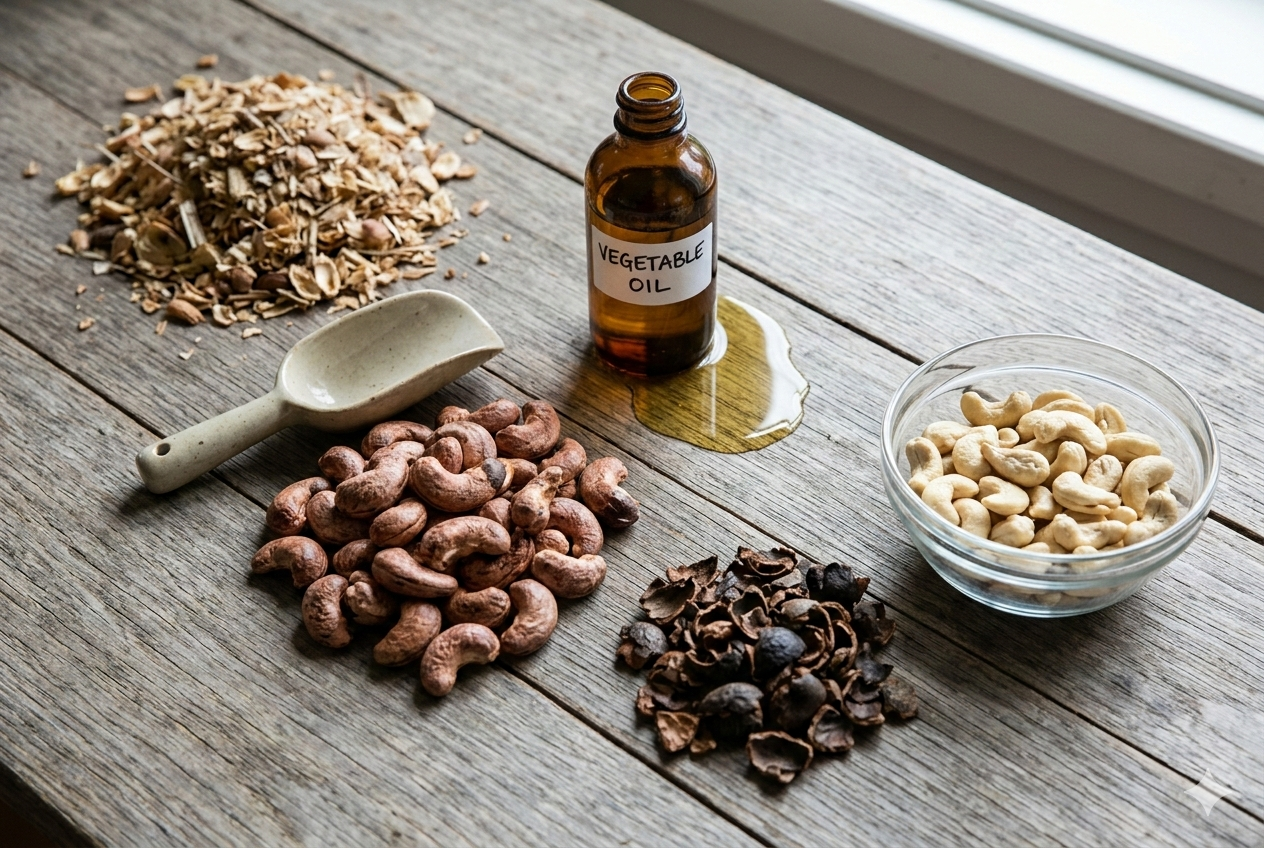
Ghana's own renewable bio-based feedstock — extracted from cashew shells and refined into a high-value industrial chemical used across resins, coatings, friction materials, and more.
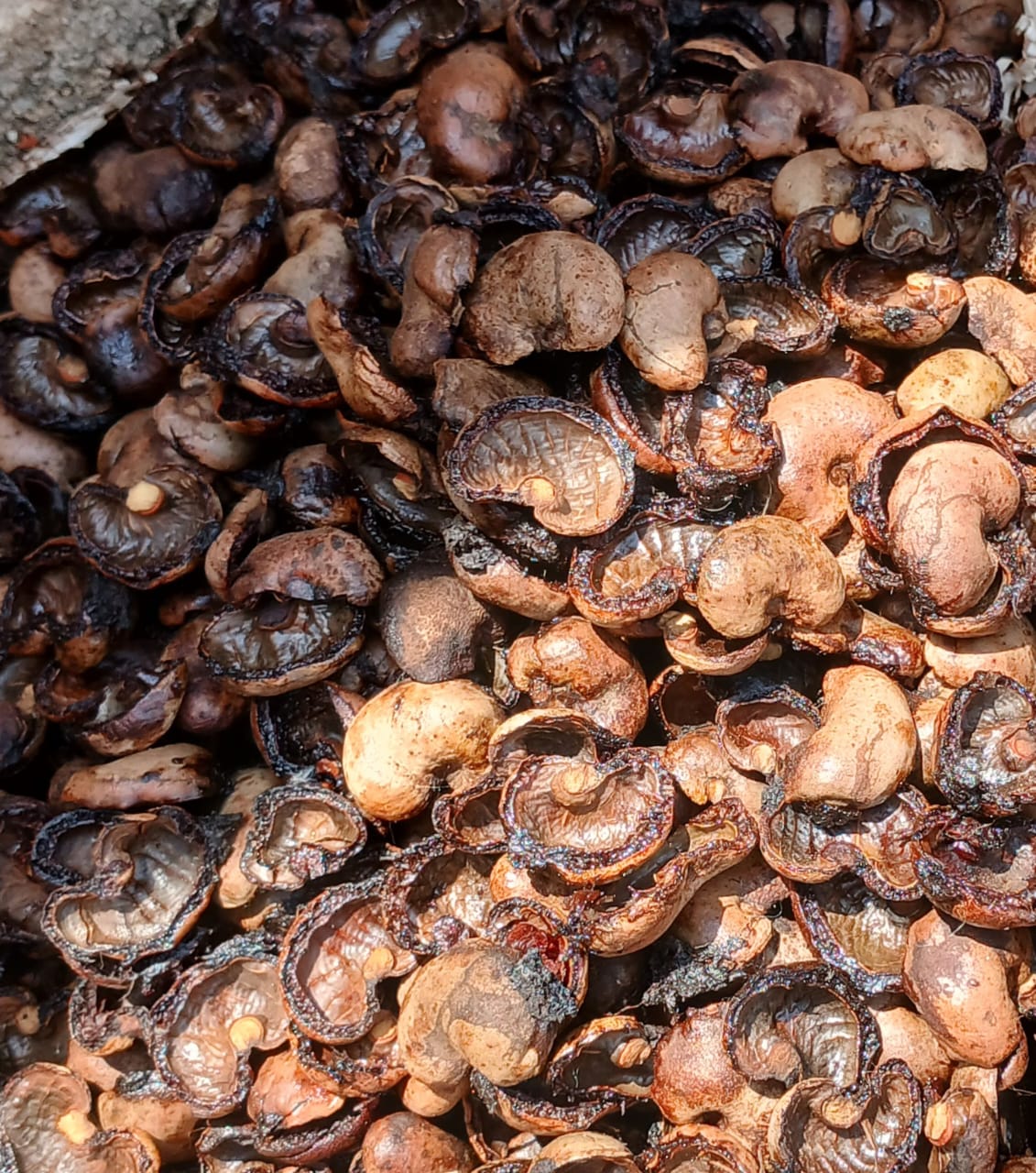
Cashew Nut Shell Liquid (CNSL) is a naturally occurring phenolic oil found in the honeycomb structure of the cashew nut shell — a by-product of cashew nut processing. It is one of the few naturally occurring phenols available in commercial quantities and is considered a premier bio-based chemical feedstock.
CNSL is not a single compound. It is a complex mixture of four main phenolic components — each with a C15 unsaturated side chain that gives CNSL its unique reactivity and versatility, making it highly valuable for chemical synthesis and polymer production.
Elrisa Chemicals extracts CNSL directly from cashew shells sourced in Ghana's Bono region — one of West Africa's largest cashew-producing zones — ensuring a reliable, traceable, and sustainably harvested supply.
CNSL is a complex phenolic mixture. Its four key components each have distinct chemistry and industrial utility.
The dominant component in raw/technical CNSL. A 2-hydroxy benzoic acid derivative with a C15 alkenyl side chain. Excellent antimicrobial and anti-corrosive properties. Decarboxylates to cardanol on heating.
The primary component of technical-grade CNSL after processing. A monohydric phenol with high chemical reactivity. Widely used in resins, coatings, surfactants, friction dust, and as a plasticizer. Elrisa's key refined derivative.
A dihydric phenol (meta-resorcinol derivative). Has strong biological activity and is being explored for pharmaceutical, anti-termite, and specialty resin applications.
A minor but reactive component structurally related to cardol. Contributes to the overall reactivity profile of CNSL in polymer and resin systems.
| Property | Detail | Industrial Significance |
|---|---|---|
| High Thermal Stability | Withstands temperatures above 250°C without significant degradation | Critical for friction materials, brake pads, and high-temperature coatings |
| Chemical Resistance | Resistant to acids, alkalis, and many solvents due to phenolic structure | Protective coatings, waterproofing, chemical lining applications |
| Natural Polymerization | Reactive unsaturated C15 side chain enables self-polymerization | Can form durable polymers without petrochemical co-reactants |
| Bio-Renewable | 100% derived from agricultural residue (cashew shells) | Reduces fossil feedstock dependency; qualifies for bio-based product certifications |
| Versatile Reactivity | Reacts with formaldehyde, epoxies, isocyanates, and amines | Base for a wide range of polymer, resin, and coating chemistries |
| Low Cost of Feedstock | Extracted from cashew shells — an abundant agro-waste in West Africa | Competitive pricing versus petroleum-derived phenols |
CNSL and its derivatives (cardanol, cardol) are used across a remarkably broad range of industrial sectors — from automotive to construction to consumer goods.
CNSL-based resins are the standard binder in automotive brake pads, brake linings, and clutch facings — providing high heat resistance and consistent friction performance.
CNSL reacts with formaldehyde to produce novolac and resol phenolic resins. Cardanol-modified epoxy resins offer improved flexibility and bio-based content — used in laminates, composites, and adhesives.
CNSL resins are used as binders in decorative laminates, electrical laminates, and fibre-reinforced composites. Offering good dielectric properties and thermal resistance.
Cardanol is sulfonated, ethoxylated, or phosphorylated to produce bio-based surfactants, wetting agents, and emulsifiers for industrial cleaning, textile, and agricultural applications.
Ghana — and the wider West Africa region — is one of the world's leading cashew-producing areas. The Bono region, where Elrisa operates, sits at the heart of Ghana's cashew belt, giving us direct, cost-efficient access to large volumes of cashew shells.
Contact Elrisa Chemicals for product specifications, technical data sheets, pricing, and production availability across Ghana and West Africa.